




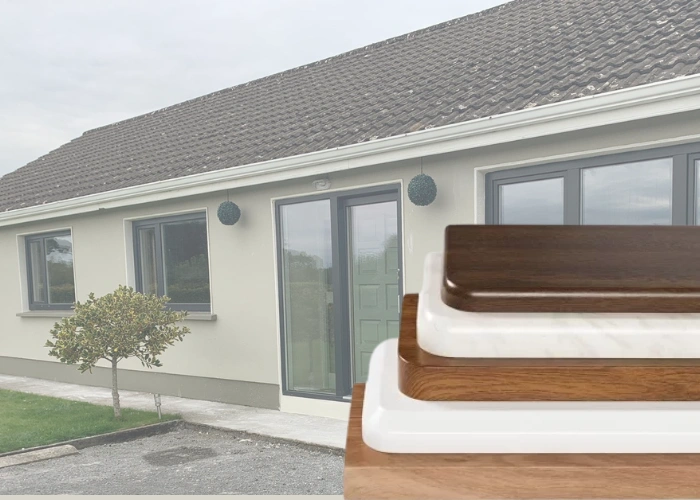
When you’re choosing windows for renovation or planning a new build, your mind is likely occupied by obvious things, like the material, size or frame colour. It is natural to focus on bigger elements that indicate the look of your home. Details like window sills remain an afterthought. However, overlooking them is a mistake, as these “silent protectors” do a lot of the heavy lifting. Window sills act as barriers against rain, draughts and heat loss. And they make your home look beautiful inside and out.
In this article, we’re going to take a closer look at window sills and explain why this small element makes a world of difference.
What are window sills?
The simplest definition would be: a window sill is just the bottom part of a window. Inside and outside. In reality, it does more than you probably expect.
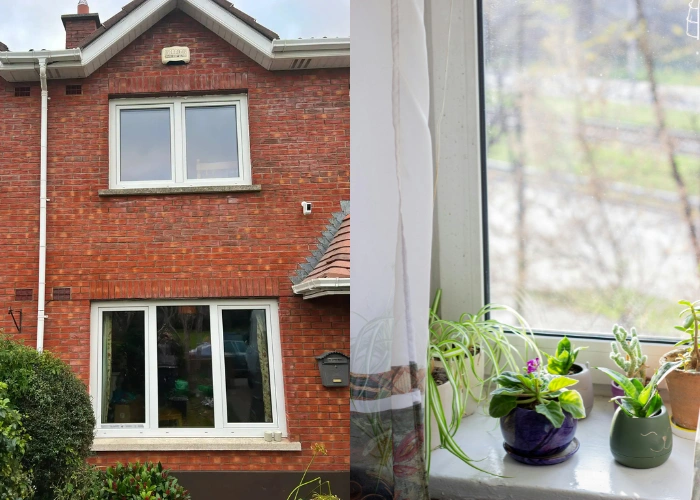
On the outside, an exterior window sill helps move water away from the wall. Without it, rain would run straight down the façade. Over time, that can leave marks, cause damp patches or just make the building look ‘’tired’’.
Inside, an interior window sill (often called a window board) protects the area below the window and gives you usable space. Plants, candles, family photos, souvenirs, everyday things you like. And of course, visually – it finishes the window. Without it, the whole thing can feel incomplete. So yes, small elements. But for sure not a small role.
Internal vs external window sill
They might seem similar, but they are made for different purposes.
Internal window sills
Internal window sills, or window boards, are all about how things look and feel inside. They don’t deal with harsh weather – no rain, no frost, no UV. So here, you’ve got more freedom in terms of materials.
This is where people think about:
- matching floors or furniture
- colour and finish
- whether they want something subtle or more visible
You’ll often see uPVC window sills, MDF boards or even wooden pieces, depending on the style.
External window sills
External window sills (sometimes called cills) have a much tougher job.
They deal with everything the weather throws at them – blazing sun, rain, wind, temperature changes. Particularly in places like the UK or Ireland, where you often get four seasons in one day. Generally, their main role is simple: to keep water away from the building. That’s why material, shape and installation matter a lot here. A badly fitted exterior window sill can cause problems in the course of time.
That being said, in some markets (like Ireland) the situation can look a bit different. In many homes, the external sill is already part of the building structure (typically made of concrete) and it’s not always replaced during new window installation.
Types of window sills – materials explained
There’s no single “best” option. It really depends on where the sill is used and what you expect from it.
uPVC window sills
It is probably the most common choice. A uPVC window sill is budget-friendly, practical and very easy to maintain. That’s why it’s often used as a uPVC internal window sill. You’ll also see it used as an external uPVC window sill in simpler projects across Europe, significantly where price is a factor. They’re widely called plastic window sills, as uPVC is a type of plastic.
Aluminium window sills
An aluminium window sill is one of the most popular options for external use. It’s a bit of a no-brainer, really: it’s durable, handles weather well and doesn’t need much upkeep. It also works nicely with Fenbro aluminium window systems, so visually everything feels consistent.
MDF window sills
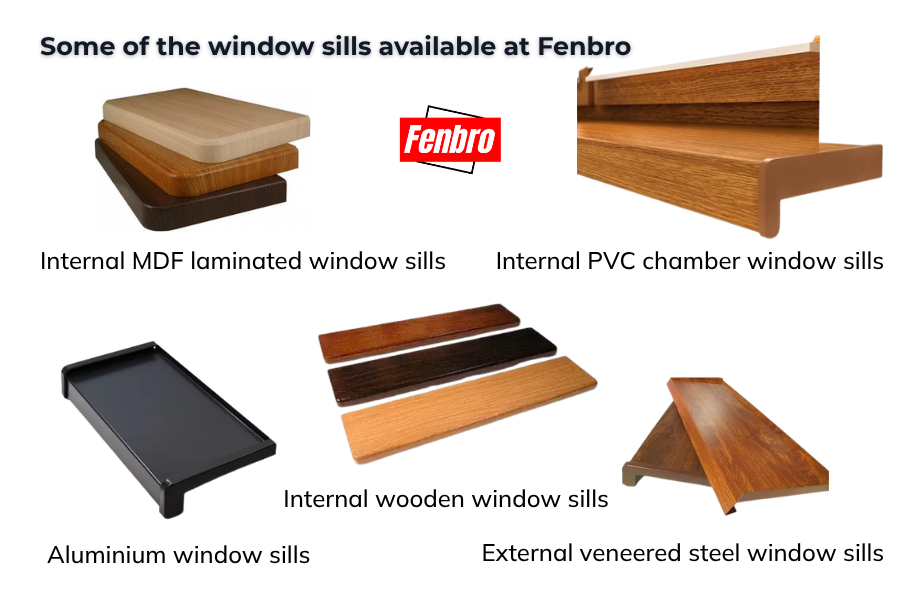
Let’s move on to another type. MDF window sills are the go-to choice for interiors. They have a smooth, elegant look and fit well with most spaces, whether it’s something modern or more classic. They’re made from compressed wood fibres (MDF core), which gives them a stable and uniform structure. On top of that, they’re finished with either a laminate, PVC foil or a thin layer of real wood (veneer), depending on the option you choose. It’s a solid middle option – not too expensive, but still looks good and works well in everyday use.
Steel window sills
You don’t see them that much, but they’re extremely enduring. We’re talking about steel window sills. You’ll mostly find them outside, where they can handle rain, wind and everything else without a problem. They’re usually made from galvanised steel, frequently coated with a protective layer (like powder coating or paint) to prevent corrosion and improve durability. The look is quite simple and clean. Depending on the finish, it can feel more minimal or more contemporary.
Wooden window sills
It won’t surprise you when we say they’re made from real wood, like beech, oak, ash or pine. Timber window sill brings a warmer, classic feel inside your home. For instance, an oak window sill is a well liked choice in more traditional spaces or where homeowners want something natural. They’re not the greatest for damp areas, but inside, in the right conditions, they work well. In their case, a bit more care is needed, but their beautiful look makes it worth all the effort.
Concrete window sills
If you live in the UK or Ireland, you’ve probably noticed them. Concrete window sills are basically everywhere on the outside of homes. You’ll see them in older buildings, where they are often part of the existing structure. In many cases (we are still talking about the UK and Ireland!), you don’t really have a choice when it comes to them – they stay as they are during window replacement. But it must be said that they are durable and battle fickle weather really well. The look is more raw, but they definitely have their place.
Laminated vs veneered window sills
When going through window sill options on our website, you’ll probably come across terms like laminated and veneered. They sound similar, so it’s easy to think they mean the same thing. But, let us tell you, they don’t.
Laminated window sills are the more practical option. They have a protective layer on top, like laminate or PVC foil, so they handle everyday use without much trouble. Scratches, a bit of moisture, general wear – nothing unusual.
Veneered ones go in a different direction. They have a thin layer of real wood on top, so the whole thing feels more natural. Warmer, less “perfect”, closer to real timber.
To sum up:
- laminated = more practical and resistant
- veneered = more natural and decorative
How to choose window sills for your home?
There’s no silver bullet when it comes to choosing the right window sills, but there are a few things worth noting.
From our experience, for interiors most customers go for uPVC window sills. That said, wooden and MDF options are also available if you’re after a different look. For external window sills, our Sales Specialists recommend aluminium. In the end, it comes down to where the sill will be used, how you want it to look and how much you want to spend.
Would you like a bit of guidance? Our team has broad knowledge on this topic and will gladly help you choose.
How much do window sills cost?
Prices depend mainly on the material and size. At Fenbro, we always do our best to keep prices as competitive as possible for our customers.
We can share that for internal uPVC window sills, smaller pieces (around 60-70 cm) can start from about €20. For longer ones (around 1.5 m) prices are typically in the range of €40–€60. For aluminium window sills, prices are higher – typically from around €55 up to €85+.
As we mentioned above: prices are influenced by the material, finish, as well as the length, width and depth of the sill.
External window sills in Ireland
When it comes to window sills in Ireland, things work a bit differently than in countries like Poland or Germany. One of the biggest differences is external window sills. In many Irish homes, especially older ones, the external sill is made of concrete and is part of the original structure of the building. Because of that, when windows are replaced, this sill is usually left as it is. In practice, that means in most standard replacement projects, there’s no need to install a new external window sill. Sometimes, there is an option to add aluminium cover to improve the look or protect it better. But this isn’t something popular that you see in every project. We’re also seeing that more and more homeowners decide to go for alternatives such as external steel window sills, veneered steel window sills or tile window sills.
Should you replace internal window sills?
Internal window sills are a different story. When replacing windows in Ireland, it’s most likely a good idea to replace the internal sills as well. This gives you a chance to properly seal and insulate the space between the window and the sill – something that’s regularly missing in older buildings. In many homes, original window boards were installed without any insulation. Just placed on the blockwork and fixed in place.
Because of that, even if you install new, high-performance windows, you might still feel draughts or notice heat loss if this area is not taken care of.
Fitting a window sill – how it works?
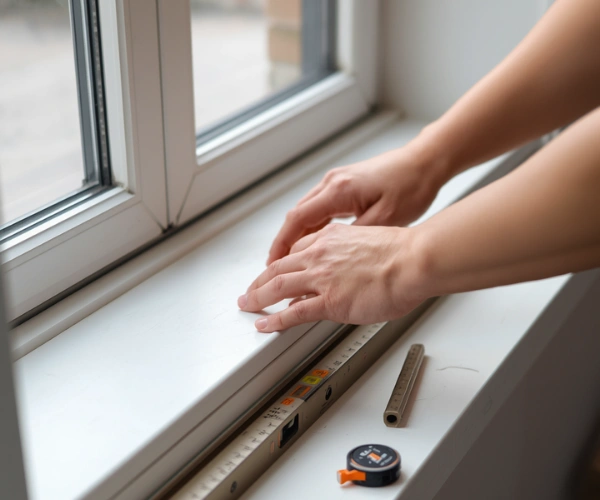
Before installing a new sill, the old one needs to be removed and the surface properly prepared. Any leftover foam, adhesive or debris should be cleaned off to create a solid base. There are a few ways to install a new sill, depending on the project. Installers may use vapour-permeable tapes, liquid membranes or other sealing solutions to improve insulation. The sill itself is usually fixed with mounting adhesive or mounting foam. If foam is used, it should fill the space evenly underneath to properly support the sill. Ideally, the sill should sit slightly under the window frame by around 5–10 mm. This helps with stability and sealing. However, it’s not always possible. In some cases, the sill is installed directly against the frame instead.
Would you like to learn more about installation methods in general? This article may be helpful: Window installation – Polish vs Irish methods.
What about new builds and warm sills?
In new builds, or more advanced installations, so-called “warm sills” are often used. These are designed to reduce thermal bridges and improve insulation at the base of the window. With a warm sill in place, installing internal window sills becomes much simpler. There’s no need for extra insulation layers, as this is already part of the system.
On the outside, a pre-shaped aluminium or steel cover is usually fitted under the window. It’s fixed with mounting adhesive and doesn’t require complex sealing.
Common issues to watch out for
Poorly chosen or installed window sills can cause more problems than you expect:
- Poor external drainage – if the exterior window sill doesn’t have the right slope, water won’t drain properly and can start running down the wall or getting underneath
- Wrong material for external use – some materials simply don’t handle weather well long term, especially in rainy climates
- Noise from external sill covers – badly fitted aluminium covers can move slightly and make noise in the wind
- Water getting underneath the sill – caused by poor sealing or incorrect installation
- Lack of insulation under internal sills – one of the most common problems, mainly in older homes, leading to draughts and heat loss
- Choosing based on price only – cheaper options can work, but not always in the long run
- Poor visual match with windows – the sill doesn’t match the frame or overall style, which affects the final look more than expected
Conclusion
At the beginning, you don’t really think about window sills. They just… aren’t on your mind. Once you go through everything related to window replacement, you realise they actually matter more than you thought. If you get them right, they just do their job for years. No issues and no surprises. And inside, they end up being more than just a small detail.
So yeah, it’s worth choosing them properly. Contact us today and see how we can help you figure out what makes sense for your new windows, your budget and the overall look. Our Sales Specialists are waiting for your message!
Frequently Asked Questions (FAQ)
What is the best material for window sills?
There isn’t one clear answer. Outside, aluminium or stone tend to work best – they just handle weather better. Inside, it’s more about the look. uPVC, wood, aluminium…all can work, depending what you’re after. You can find them all in the Fenbro offer.
Are uPVC window sills a good choice?
Of course, they’re a safe option. They’re affordable, easy to clean and do what they’re supposed to do. That’s why a lot of people go for them. Mostly inside, but you’ll see them outside too in simpler setups.
Plastic window sill – is it the same thing as uPVC window sill?
Yes, they’re repeatedly used as synonyms. uPVC is a type of plastic, so both terms basically refer to the same thing.
Are aluminium window sills better than uPVC?
For outside – in most cases, yes. Fenbro experts can confirm: they deal with rain and temperature changes better and don’t really need much attention later on. uPVC is still fine, just not as tough long term.
Should I invest in marble window sills for a modern home?
If you care about how it looks, then probably yes. They give a more solid, finished feel. And they last. One thing to keep in mind is that they’re quite heavy. They are also more expensive, so not everyone goes for them.
Can window sills be made to measure?
Absolutely, and it’s sometimes the better option. A made-to-measure sill just fits properly, without awkward gaps or edges that don’t quite line up. It looks cleaner, feels more finished and simply works better – significantly if your windows aren’t standard sizes.
Is fitting a new window sill difficult?
Not at all. First the surface needs to be prepared by removing any old materials or dust and all remaining glue – so that there is a good base for the new product to be mounted to. Mounting adhesive or foam will hold the new sill in place and must support the entire length of the product. In a perfect world, the sill should be installed so that it sits 5–10 mm underneath the window frame which helps create a good seal from air leakage and ensures overall stability.
