




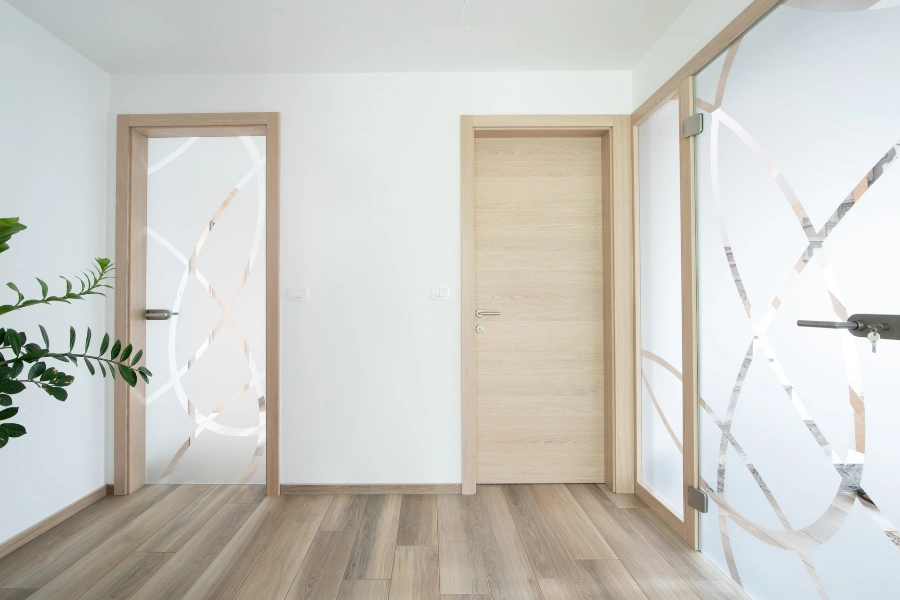
On the Fenbro blog, you can find plenty of articles about front doors. External doors naturally get a lot of attention, as they protect your home and greet your guests. But this time we want to talk more about internal doors. Internal doors are one of those elements that people don’t always think about in depth – until they start using them every single day. Then suddenly things matter. How they close. How solid they feel. How much sound they block.
Over the years at Fenbro, we’ve seen how much impact internal doors have on everyday comfort. In this guide, we would like to discuss everything that matters about interior doors: design, materials, construction and which ones work best in each room.
Internal doors – more than just dividers between rooms
Interior doors do much more than separate rooms.They:
- create privacy
- reduce noise
- influence light flow
- shape the overall feeling of your interior
A lightweight door that feels hollow when you knock on it? You notice it. Maybe not on day one, but after a few weeks, you start to feel that something’s missing. It closes with a slight echo. It doesn’t feel quite as solid as you expected.Now compare that to a well-made door with real weight to it. It shuts smoothly. It feels steady in your hand. There’s a quiet confidence in the way it moves. It’s a small detail, but it changes the way your home feels.
What are the most popular internal door styles?
It’s tempting to focus straight away on materials, but design usually comes first. After all, internal doors are something you see every day.Here is the short overview of the most popular interior door styles:
Panel doors
Panel doors have visible sections set into the door. That slight detailing gives them a bit more presence compared to a completely flat door.They’re common in older houses, but they don’t automatically make a space look traditional. In simpler versions, they still work perfectly well in modern homes – especially if you want something that feels solid but not too minimal.
Flush doors
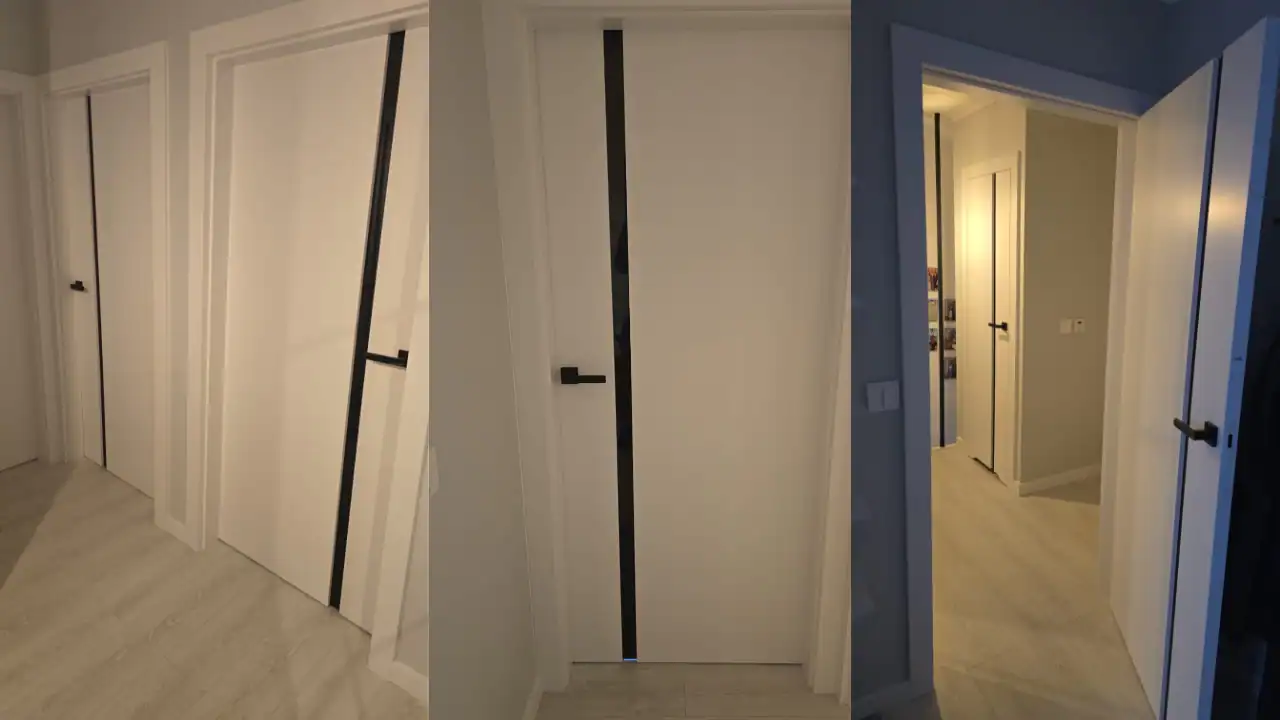
Flush doors are flat and smooth. No detailing, no framing, just a clean surface.They’re frequently chosen in minimalist interiors because they keep things simple. They don’t try to be a feature. They just sit quietly in the background, which can actually make a space feel calmer.
Glazed internal doors
Glazed doors include glass within the door leaf. Sometimes it’s a narrow strip, sometimes a larger section.They’re practical in areas where you want light to move between rooms. They still create separation, but they don’t completely block the space off.
Steel-look / Industrial doors
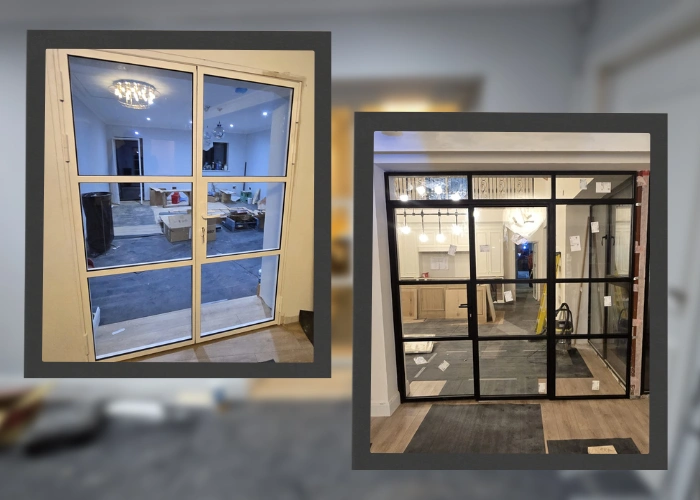
Steel-look doors are more noticeable. Slim frames, larger panes of glass, often darker finishes.They tend to work best in more contemporary homes, especially where the architecture already has a modern feel. They’re rarely an accidental choice – if you go for this style, it’s usually because you want them to be noticed.As for mixing different styles, it’s possible. But in most homes, keeping things consistent simply feels easier on the eye. Too many different designs can start to compete with each other.
What are the best materials for modern internal doors?
This is where your long-term satisfaction is decided.Internal doors are typically made from:
- Wood
- Aluminium
- MDF
- Glass (combined with other materials)
Let’s look at them realistically.
Wooden internal doors – the best choice for years to come
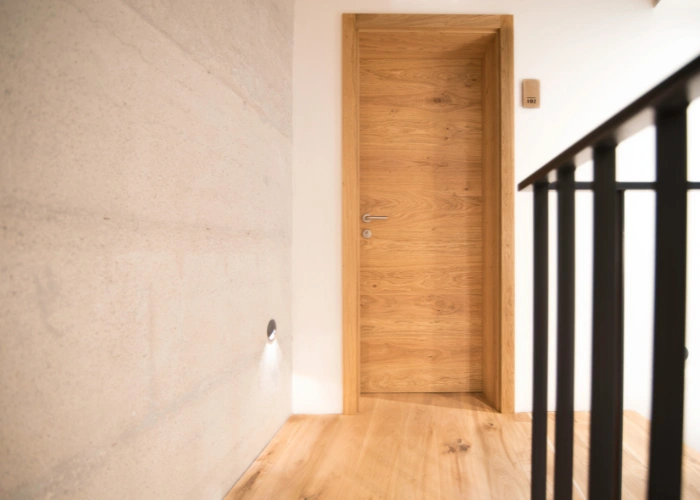
If we’re speaking honestly, wood remains the strongest overall option for internal doors. And not just because it looks good.Wooden doors feel different. They have weight. They close differently. They sound different. You might not feel it straight away. Give it a few months and you probably will.
Why wood stands out:
- Better acoustic insulation
- Stronger, more stable structure
- Longer lifespan
- Premium feel in daily use
- Natural warmth and character
Oak internal doors are very popular among wood door options. Oak is thick and has a high strength-to-weight ratio which is an advantage in high traffic areas (halls, dining rooms etc.).
Other hardwoods are also used for internal doors. One example would be meranti; although slightly less dense than oak; it’s stable and very durable, making it a viable alternative for someone who desires a wood door but wants a finer grain pattern or finish than oak.
Another advantage? Timber ages beautifully. Instead of looking worn, it develops character. And if needed, it can be sanded and refinished – something that simply isn’t possible with many synthetic materials. For homeowners who want long-term quality rather than a short-term solution, wooden internal doors are often the smartest investment.
Aluminium internal doors
Aluminium internal doors mainly show up in more modern homes. You’ll see them in spaces with lots of glass, darker frames and a clean, minimalist look.They’re easy to live with. They don’t need much maintenance and they won’t react to humidity in the same way timber does. Not to mention their durability. But they also don’t have that same sense of warmth. And in terms of sound, they’re not usually the strongest option unless combined with specialist glazing.
MDF internal doors
MDF doors are frequently chosen for cost reasons. They provide a smooth painted finish and can look clean and modern.However:
- They are typically lighter.
- Acoustic performance is lower.
- Long-term durability may not match wood.
For low-traffic rooms, they can be sufficient. But for bedrooms, offices or high-use areas, many homeowners prefer something more substantial.
Internal doors with glass
Glass doors are ideal when natural light is a priority. They’re commonly used between shared spaces rather than private ones.They’re usually combined with wood or metal frames for structural support. Glass interior doors are also available as sliding options. If you’re considering this solution, you can explore our range of internal steel doors.
Choosing the best internal doors room by room
Each room does something different. So the door should, too.
Bedrooms
In a bedroom, you mostly just want quiet. A proper solid core timber door makes a real difference here. It’s heavier, it shuts properly, and it keeps more sound out. If you’re choosing oak internal doors for anywhere, this is one of the best places to use them.
Home office
Working from home changes how you think about doors. If the house is busy, a lightweight hollow door won’t cut it. A solid timber door gives you an actual break from the noise. You notice it straight away.
Bathrooms
Bathrooms are less about weight and more about how the door handles moisture. An engineered timber door with a decent finish is usually the safer bet.
Living rooms
Living rooms are more visible, so people think more about style here. Glazed timber doors can work well if you still want light coming through. Just make sure the door isn’t hollow, otherwise it can feel a bit cheap.
Kitchens
Kitchens can be loud. And they carry smells. If it’s not open-plan, a solid timber door helps keep that contained. Some people go for steel-look doors here, mostly because they like the look of them.
How can you take care of internal doors?
Maintenance depends on the material. Timber doors need the occasional clean and sometimes refinishing over the years, but that’s simply part of having a natural material. MDF doors are lower maintenance day to day, though harder to repair if damaged. Glass doors just need regular cleaning, while aluminium tends to be the easiest overall, usually requiring nothing more than a wipe down.
Common mistakes homeowners make
Years of experience have shown us that some decisions are made too quickly:
- Choosing based only on price
- Ignoring door core construction
- Too many different door styles in one home
- Lightweight doors in high-traffic areas
- Forgetting about acoustic needs
Internal doors are not something you want to replace every few years. Thinking long-term pays off.
Don’t forget about measuring
Before ordering your internal doors, make sure the measurements are right. It’s not just about width and height – wall thickness, finished floor level and even the door swing all matter. In our guide on how to measure internal doors, we explain the process step by step so you can avoid costly mistakes.
So, which internal doors should you choose?
To sum up, if you’re looking for something that will last, reduce noise properly, feel solid in everyday use and still look good years from now, wooden internal doors are the safest overall choice. That doesn’t mean other materials are wrong. It simply means that timber tends to offer a stronger balance between durability, comfort and appearance over time.
If you are uncertain as to the best option for your home, our Sales Specialists have a strong understanding of internal doors. Don’t hesitate to contact us for assistance in getting a solution that will work well for your home!
Frequently Asked Questions (FAQ)
When should I consider interior door replacement?
Think about replacing interior doors simply when the old ones are worn or damaged. When they let too much noise through. Or when they just don’t match the rest of the room anymore.
Are black, white or grey internal doors a better choice?
It depends on what you like. Black doors stand out more and suit modern spaces. White doors are the safest option and work in almost any home. Grey is a middle choice. It is softer than black but less plain than white.
Are custom interior doors available at Fenbro?
Of course. Fenbro offers custom internal doors in different sizes and finishes.
Are oak internal doors a good choice?
Yes, if you want something solid. Oak doors feel heavier and usually last longer than lighter options.
